Sweet Basil
Ocimum basilicum
Overview
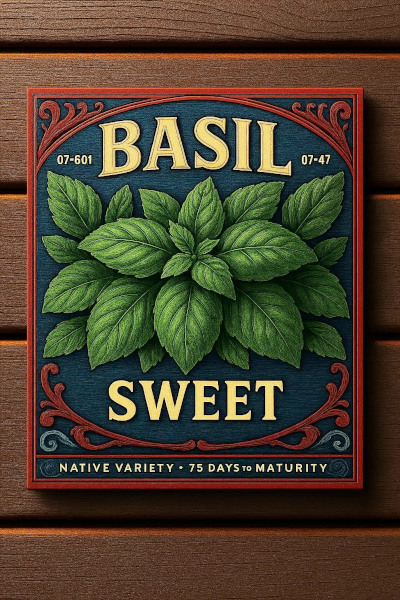
The King of Culinary Herbs
Sweet Basil (*Ocimum basilicum*) is the classic variety used globally in Mediterranean and Italian cooking, most famously as the core ingredient in fresh pesto. It is a warm-weather annual, characterized by its large, glossy, dark green, slightly cupped leaves and its intensely sweet, anise-like, and slightly peppery aroma.
Basil requires constant warmth and plenty of sunshine to thrive, making it a perfect container plant or addition to a sunny herb garden. Unlike many herbs, basil is a heavy feeder that requires frequent watering and regular harvesting to maintain its bushy habit and prevent flowering.
Ideal Kitchen Companion
This herb pairs exquisitely with tomatoes, garlic, and cheeses. Its flavor is highly volatile, meaning it is best added fresh and raw right at the end of cooking.
General Grow Information
| Property | Value |
|---|---|
| Plant Height | 18-30 in |
| Plant Spacing | 12-18 in |
| Row Spacing | 24 in |
| Sunlight Needs | Full Sun (6+ hours) |
| Sprouting Time | 7-14 days |
📜 Plant Folklore & Mythology
Discover the history and lore associated with Sweet Basil:
- Basil: The Protector's Scent
- Basil: The Cleansing Ritual
- Basil: The Balcony Signal
- Basil: The Royal Herb
- Basil: The Scorned Gift
- Basil: The Viper's Kiss
- Basil: The Jealous Lover's Burial
- Basil: The Soul's Guide
- Basil: A Charm for Coin
- Basil: The Fertility Charm
Interested in plant mythology and cultural history? Explore our full Folklore Index
Plant Care and Cultivation
- Pinch to Prevent Flowering: The most crucial care step is frequent harvesting and "pinching" off the central stem whenever a flower bud appears. Once basil flowers, the leaves often become bitter.
- Warmth is Key: Basil is extremely sensitive to cold. Do not plant outdoors until night temperatures are reliably above **50°F (10°C)**. Any frost will kill the plant.
- Harvesting: Harvest by cutting the stem just above a pair of leaves. This encourages two new stems to grow, resulting in a much bushier, higher-yielding plant.
- Fertilization: Basil is a heavy feeder. Provide a balanced, water-soluble fertilizer every 4-6 weeks to support the continuous production of large leaves.
Preservation Methods
Basil leaves do not dry well as they lose most of their aromatic oils. The best methods for preservation are freezing the leaves in oil (like olive oil) or processing them into pesto and freezing the paste.The Problem with Flowering
When basil plants begin to flower (a process called "bolting"), the plant redirects its energy from leaf production to seed production, causing the essential oils in the leaves to change composition, resulting in a significantly less appealing, bitter flavor.Recipes Featuring Sweet Basil
No recipes featuring this plant have been added yet. Check back soon!