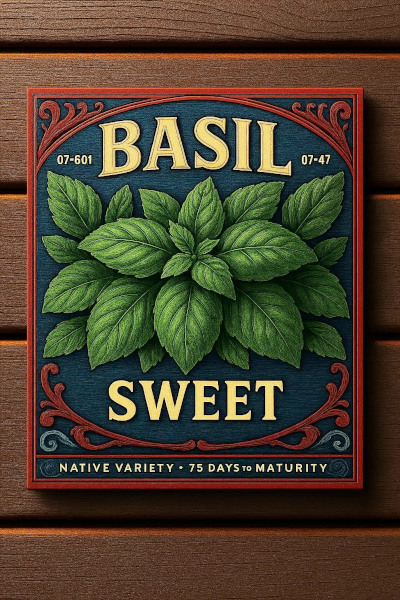
Basil: The Soul's Guide
While we often focus on basil's connections to love, money, or the divine during life, the fragrant herb plays an equally important, albeit solemn, role in the folklore of death and transition. In several Mediterranean and Eastern European cultures, Ocimum basilicum is not merely a memorial; it is considered a vital ritual tool used to honor the deceased, purify the passage to the afterlife, and guide the soul on its final journey. This powerful tradition transforms the sweet scent of basil into a spiritual comfort, ensuring the departed are treated with the highest reverence, firmly establishing its place in burial plant folklore.
The use of basil in funeral rites is particularly strong in Orthodox Christian traditions, where its sacred status—derived from the True Cross legend—gives it special power over evil and decay. In countries like Greece and Romania, sprigs of basil are frequently woven into wreaths, placed on the grave site, or included in the preparation of the body. This practice serves two main purposes. First, it honors the deceased by surrounding them with the Royal Herb (Vasilikos). Second, the herb's strong, clean scent and protective aura are believed to purify the grave site and ward off any evil spirits or negative influences that might impede the soul's peaceful ascent. This protective quality reinforces basil’s role as a silent guardian.
Beyond its use in the coffin or on the grave, basil is often incorporated into the practical rituals of remembrance. In some folk traditions, water infused with basil is used to clean the tools used for burial or the hands of those who prepared the body. This is a cleansing act designed to ensure those who remain are not spiritually tainted by the contact with death, while the lingering basil scent provides a soothing comfort. The herb acts as a symbolic bridge, allowing the living to interact with the somber space of the grave while providing a fragrant, protective barrier of spiritual purification.
The placement of basil on graves also serves as a potent, living symbol of memory and hope for the afterlife. Because basil is seen as the plant that sprang up where Christ's cross lay, planting it on a tomb symbolizes the promise of resurrection and eternal life. The act of tending the basil on a loved one's grave becomes an ongoing ritual of devotion. The growth of the plant itself, nurtured by the sun and rain, mirrors the soul's transition and eventual flourishing in the next realm, giving the mourners a tangible connection to the spiritual life that continues beyond the grave. This deep connection makes basil a soul guide in the most literal sense.
From the passionate lover's signal to the solemn guide for the soul, basil's folklore journey encompasses the full spectrum of human experience. The tradition of using basil in burial rites ensures that the plant is present at every major life transition, from courtship and prosperity to death and remembrance. When we cultivate basil today, we participate in a continuous, global history that imbues this simple herb with powerful meaning. Its enduring presence in the world of funeral herb rituals is a powerful reminder that sometimes, the simplest fragrances carry the deepest spiritual significance.
Related Plants & Seeds
This entry is tied to the history and lore of the following plants in our catalog. Click to view their full profile, guides, and seed options: