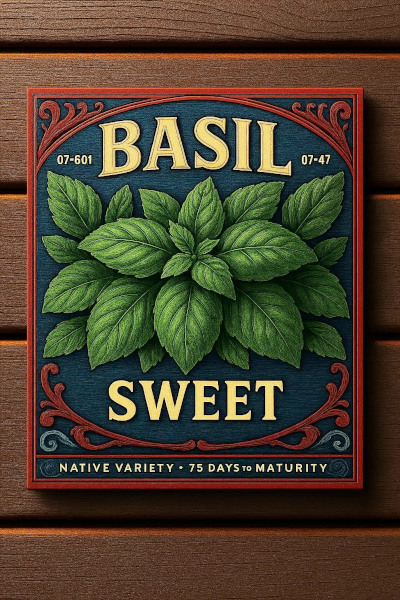
Basil: The Fertility Charm
While basil’s folklore is vast—covering everything from vipers and jealousy to royal sanctity—one of its most fundamental and ancient associations is with the continuation of life itself. Across various cultures in the Mediterranean, Africa, and Asia, the herb’s powerful, fast-growing nature made it a potent symbol of human fertility, used in rituals to promote conception, guarantee healthy pregnancies, and ensure safe childbirth. This tradition views the herb's lush, abundant growth as a mirror for human fecundity, cementing its place as one of the most vital herbs in fertility folklore.
The belief that basil was an ally in conception stemmed from the plant’s impressive life cycle. Basil seeds sprout rapidly, and the plant itself quickly grows into a bushy, productive specimen—a clear botanical representation of vitality and abundance. In many regions, women wishing to conceive would ingest basil seeds or leaves, or plant the herb specifically as a devotional act, hoping to absorb its abundant energy. In some parts of Greece and Italy, a pregnant woman would keep a pot of basil nearby throughout her term, believing its strong aroma would protect both her and the unborn child from evil influences or illness, acting as a fragrant protective herb.
In African and Caribbean folk traditions, the use of basil extends specifically to ensuring a safe passage during labor. Basil leaves were often brewed into strong teas or infusions and given to women to help ease the pain of childbirth and speed delivery. The rationale was that the same energy that makes the basil plant sprout quickly could be transferred to hasten the labor process. This medicinal and ritualistic use highlights the plant's dual nature: it was seen both as a spiritual protector throughout the pregnancy and a powerful, practical aid during the intense physical event of childbirth rituals.
The symbolism also appears in the way basil was given as a gift. In some villages, it was customary to gift a new bride a freshly planted basil cutting, often tied with white ribbon, symbolizing the hope for a family that would grow as quickly and vigorously as the plant itself. Similarly, basil was sometimes scattered or incorporated into the marriage bedding to bless the union with fruitfulness. The scent itself was important; its sweet, inviting fragrance was thought to create a welcoming and harmonious environment conducive to both passion and domestic prosperity.
The continuity of basil’s role as a fertility charm shows how deeply interconnected humanity and the plant world have always been. From a tiny seed planted with a silent prayer for a child to a protective aroma during labor, basil has been a silent partner in the most profound moments of life. When you plant basil seeds, remember that its history is tied not only to flavor but to the universal human desire for growth, family, and the abundant continuation of life, securing its place forever in herb history.
Related Plants & Seeds
This entry is tied to the history and lore of the following plants in our catalog. Click to view their full profile, guides, and seed options: