Sugar Pie Pumpkin
Cucurbita pepo
Overview
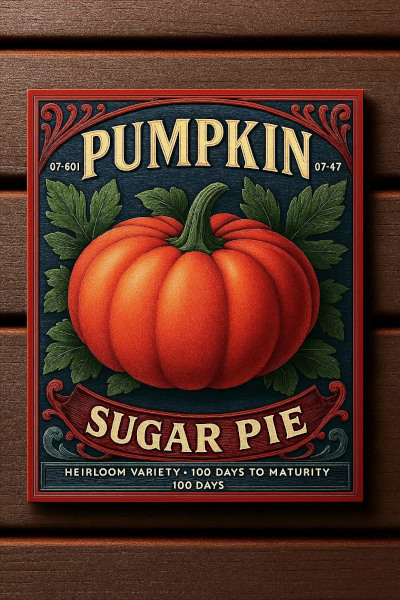
The Premier Pumpkin for Baking
The Sugar Pie Pumpkin, also often sold as "Pie Pumpkin" or "Small Sugar," is the quintessential variety for the kitchen. Unlike large carving pumpkins, this variety focuses flavor over size, offering dense, sweet, and non-stringy flesh. The pumpkins are petite, usually weighing between 5 to 7 pounds, making them ideal for handling and processing.
These plants produce large, sprawling vines, requiring ample space in the garden. They are highly reliable producers, yielding 4 to 6 pumpkins per vine under good conditions. The deep orange flesh bakes down into a smooth, naturally sweet puree that is superior to the watery, coarse texture of ornamental gourds.
Processing for Puree
Because the sugar content is naturally high, less seasoning or sweetener is required when using the puree for pies, bread, and desserts.
General Grow Information
| Property | Value |
|---|---|
| Use | Baking and Pie Filling |
| Growth Habit | Compact Vine |
| Plant Habit (Vine) | Sprawling |
| Plant Spacing (Hills) | 6-8 ft apart |
| Row Spacing | 8-10 ft |
| Sunlight Needs | Full Sun (8+ hours) |
| Sprouting Time | 7-10 days |
📜 Plant Folklore & Mythology
Discover the history and lore associated with Sugar Pie Pumpkin:
- Pumpkin: The Jack O'Lantern's Irish Roots
- Samhain: The Witches' New Year and the Final Harvest
- Three Sisters Farming
- Pumpkin: Cendrillon's Golden Carriage (Cinderella)
- Pumpkin: Protection & Warding
Interested in plant mythology and cultural history? Explore our full Folklore Index
Plant Care and Cultivation
- Soil Temperature: Do not plant until the soil temperature is consistently above 70°F (21°C). Pumpkins require very warm conditions to germinate and thrive.
- Watering: Water deeply at the base of the plant, avoiding the leaves, which can promote powdery mildew. Stop watering approximately one week before harvest to improve flavor and concentration.
- Pest Control (Squash Vine Borer): Watch closely for the Squash Vine Borer. Inspect the stems near the base regularly and cover the ground with mulch to deter egg laying.
- Harvesting: Harvest when the pumpkin rind is hard and the stem has started to dry and shrivel. Leave at least **2 inches of stem** attached; this prevents rot and ensures the pumpkin will cure properly for storage.