Pinto Beans
Phaseolus vulgaris
Overview
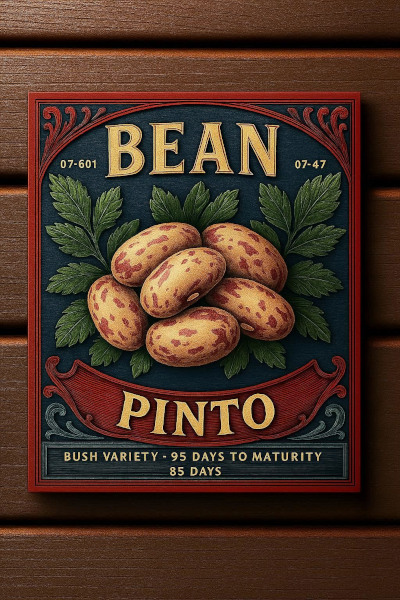
The Painted Staple of the Americas
The Pinto bean is the most popular dry bean variety in the United States and Mexico, celebrated for its smooth, creamy texture and earthy flavor when cooked. It gets its name, *pinto*, from Spanish, meaning "painted," which refers to the beautiful mottled beige and brown pattern visible on the dried seed coat.
Most common varieties are bush type, meaning they grow into a compact, self-supporting shrub and mature quickly, making them highly reliable for direct sowing. Pinto beans are exceptionally high in fiber and protein, serving as a dietary cornerstone for thousands of years.
Dual Harvest Potential
While traditionally grown as a dry storage bean, Pinto beans can also be harvested young as green snap beans, though they are most valued for their dry yield.
General Grow Information
| Property | Value |
|---|---|
| Type | Shelling Bean (Dry) |
| Growth Habit | Bush/Semi-Vining |
| Plant Height (Bush) | 12-18 in |
| Plant Spacing | 4-6 in |
| Row Spacing | 30-36 in |
| Sunlight Needs | Full Sun (6+ hours) |
| Sprouting Time | 7-10 days |
📜 Plant Folklore & Mythology
Discover the history and lore associated with Pinto Beans:
Interested in plant mythology and cultural history? Explore our full Folklore Index
Plant Care and Cultivation
- Direct Sow Only: Beans do not tolerate transplanting well. Sow seeds directly into the garden after all danger of frost has passed and the soil has thoroughly warmed up.
- Watering: Water consistently during the flowering and pod-setting stage. Once the pods begin to dry out for dry bean harvest, cease watering entirely.
- Nitrogen Fixation: As legumes, beans fix nitrogen in the soil. Avoid high-nitrogen fertilizers, which will cause excessive leafy growth and reduce bean yield.
- Harvesting Dry Beans: Wait until the bean pods are fully dried, shriveled, and rattling on the vine. Pull the entire plant and cure it in a sheltered, dry location before shelling.