Daikon Radish
Raphanus sativus
Overview
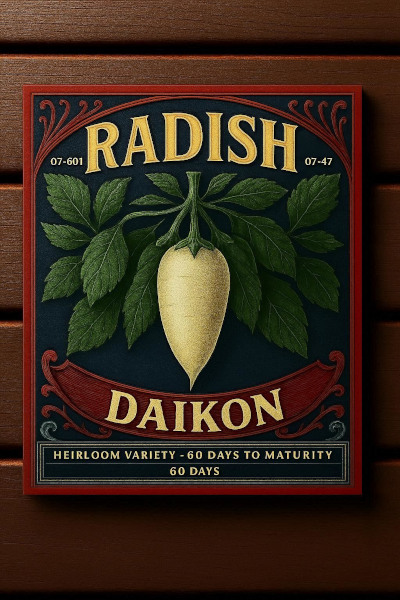
The Japanese Winter Radish
Daikon, which translates to "great root" in Japanese, is a large, white, cylindrical winter radish. It is a staple across much of East Asia, prized for its crisp texture and much milder, slightly sweet flavor compared to the common red radish. Daikon roots can grow up to 18 inches long and several inches in diameter, making them one of the most substantial root crops in the garden.
This variety is best planted in late summer or early fall for a winter harvest, as cool temperatures enhance its sweetness and prevent bolting. Its massive taproot naturally breaks up heavy or compacted soil, making it an excellent cover crop in large gardens even when not intended for food.
Texture and Use
The flavor is mild when raw, becoming sweet and tender when cooked. It is primarily used in pickling (*tsukemono*), grated as a garnish, or added to braised dishes and stews.
General Grow Information
| Property | Value |
|---|---|
| Root Depth | 12 to 18 inches |
| Use | Soil Compaction, Pickling |
| Plant Height (Foliage) | 12-18 in |
| Plant Spacing | 6-8 in |
| Row Spacing | 24-30 in |
| Sunlight Needs | Full Sun (6+ hours) |
| Sprouting Time | 4-7 days |
Plant Care and Cultivation
- Deep, Loose Soil: Daikon requires extremely loose, deep soil (at least **18 inches**) free of rocks or compacted clay. Failure to prepare the soil deeply will result in stunted or forked roots.
- Avoid Summer Planting: Do not plant Daikon in the heat of summer. High temperatures trigger bolting, causing the root to become tough, woody, and intensely hot, often making it inedible.
- Fertilization: Fertilize moderately with a balanced fertilizer. Avoid excessive nitrogen, which can lead to lush greens but poor root development.
- Harvesting: Harvest when the exposed shoulder of the root (the part sticking out of the ground) reaches the desired diameter, typically 2-3 inches. Leaving them too long can make them woody.
- Soil: Requires deeply tilled, loose soil for long taproot development.
Soil Preparation for Root Depth
Daikon Radishes require deeply tilled, loose soil, ideally without rocks or compacted layers, which will cause the long taproot to fork or stunt its growth.
Fodder Radish / Tillage
Beyond food, Daikon is highly valued in agriculture as a cover crop, sometimes called "Tillage Radish." The deep roots penetrate compacted soil, naturally aerating it and improving water retention for the following season.A Unique Zest
While mild, Daikon contains small amounts of the enzyme myrosinase. When grated, this enzyme converts into a pungent, mustard-oil flavor that gives it a subtle kick, which quickly fades after grating, making it a perfect raw garnish.Recipes Featuring Daikon Radish
No recipes featuring this plant have been added yet. Check back soon!